

Boiler keeps losing pressure? How to find where the water’s going
Topping up your boiler pressure every week or month? Water’s getting out. How to read the gauge, find a weeping joint, check the relief valve pipe outside, test for a flat expansion vessel, and which fixes need a Gas Safe engineer, with a fix finder.
 HanaHow6 minute read
If you’re topping up your boiler pressure every week or every month, water is getting out of your heating somewhere. It’s usually one of three places: a joint that weeps rather than drips, the pressure relief valve’s pipe outside, or somewhere you can’t see. The checks below are safe to do yourself, and the fix finder takes you through them in order and tells you who to call.
What have you noticed?
This is for combi and system boilers with a pressure gauge or display. Most want 1 to 1.5 bar when the heating’s off and cold. Oil boiler? Where it says Gas Safe, use an OFTEC registered technician.
Top it up once, then watch it
Bleeding lets a little water out, so the pressure drops. Top it up once with the heating off and cold, and it should hold.
- Find the filling loop, usually under the boiler: a silver braided hose between two small taps. If the hose has been taken off, screw it back on first. Some boilers have a filling key or a lever instead, and the manual shows where.
- Open one tap fully, then open the other one slowly. You’ll hear water going in.
- Close both taps once the gauge reads 1 to 1.5 bar. If the hose unscrews, take it off.
Read the gauge cold, first thing in the morning, for the next week or two. Is it holding?
See these steps in the guideCheck the outside pipe, then read the gauge cold and hot
If there’s no leak you can see, the water is often going out through the boiler’s pressure relief valve, which lets water out if the pressure passes 3 bar.
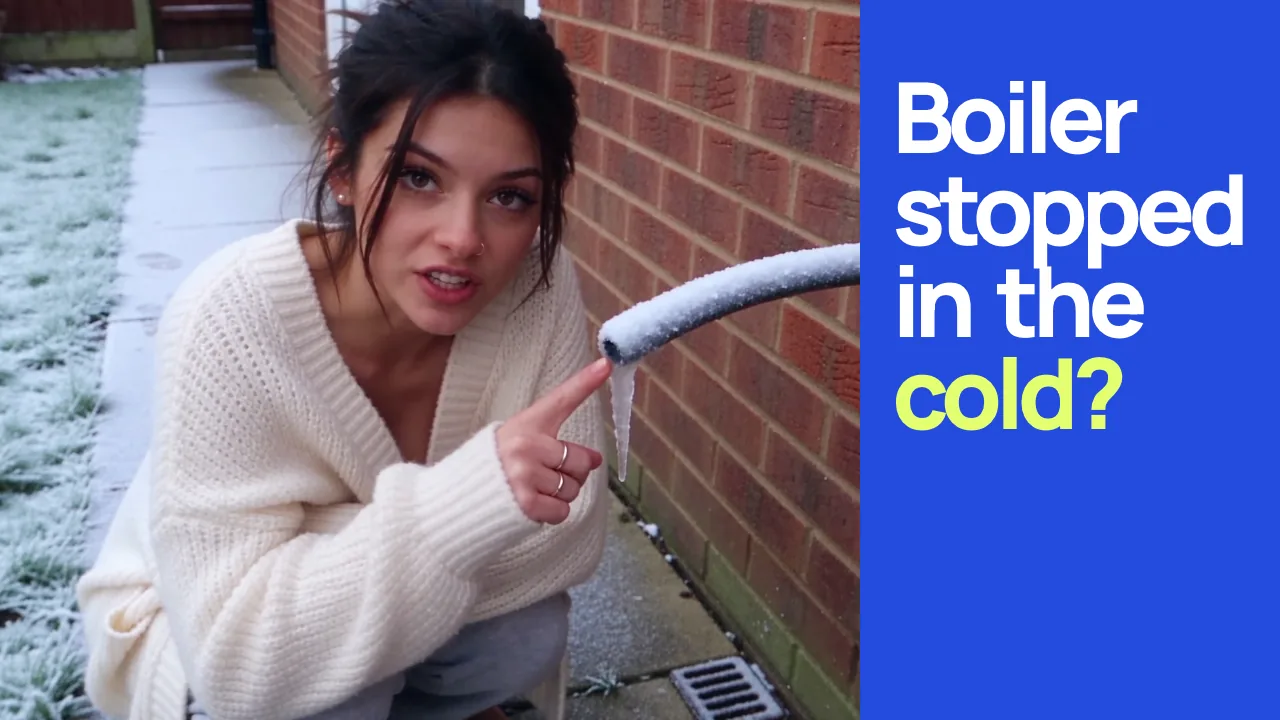
- Outside, near the boiler, look for a thin copper pipe that comes through the wall and turns down. Leave any white plastic pipe alone: that’s the condensate pipe, and it drips while the boiler’s running. No copper pipe at all? It may run into a drain, so ask your engineer.
- Is the copper pipe’s end wet when it hasn’t rained, or is there a stained patch under it? Not sure? When the boiler’s cold, tape a sandwich bag loosely over the end and check it in a couple of days, first thing in the morning. What comes out can burn you, so don’t touch it while the boiler’s running, even just for hot water. Don’t do this in freezing weather, and take the bag off once you’ve checked.
- Read the gauge cold, first thing in the morning. Then read it again once the heating’s fully warmed up.
What did you find?
See this in the guideThe relief valve is letting water out
That valve opens when the pressure passes 3 bar. Sometimes it’s worn and won’t close properly, but often the pressure really is climbing that high when the heating’s on.
- Check both taps on the filling loop are fully closed. One left open lets mains water creep in and push the pressure up.
- Read the gauge cold, then again once the heating’s fully warmed up.
How much higher is it when the heating’s warm?
See this in the guideSuspect the expansion vessel
The expansion vessel is a small tank with a cushion of air behind a rubber sheet. As the water heats up and grows, it squeezes into that cushion. Over time the air leaks away, so the pressure climbs when the heating’s on, the relief valve lets water out, and when it cools, the gauge is low.
- Until it’s fixed, top it up cold to 1 to 1.5 bar, no more. Overfilling just makes the valve open sooner.
- Don’t take the boiler’s cover off or pump the vessel up yourself. Recharging or replacing it is a job for a Gas Safe registered engineer.
- Tell them your cold and hot readings, and whether the outside pipe’s wet.
The relief valve itself may be worn
If the pressure doesn’t climb much when the heating’s warm but the outside pipe still gets wet, the valve may not be closing properly. Grit or wear can let it drip below 3 bar.
- A new relief valve is a job for a Gas Safe registered engineer. Don’t take the boiler’s cover off yourself.
- Until then, top it up cold to 1 to 1.5 bar, no more.
- Tell them your cold and hot readings, and that the outside pipe’s wet.
Find where it’s coming from
- Wipe each joint near it with a dry tissue and look for a damp mark: every radiator valve, including under the caps, the nuts at each end, and the pipes under the boiler. Rust, a green crust or staining can mark an old weep.
- Don’t unscrew any covers to look. Put a towel or a bowl under a drip.
- A brown stain on a ceiling usually means a leak above it, which can be a heating pipe under the floor.
Where is it?
See this in the guideGet a plumber or heating engineer to fix it
Leaks on radiators, valves and the pipes between them are plumbing work. A plumber can also trace a leak hidden under a floor or in a wall.
Until it’s fixed, top the pressure up cold to 1 to 1.5 bar, no more, and keep something under the drip.
Call a Gas Safe registered engineer
Water from the boiler itself, or from anything inside its casing, needs a Gas Safe registered engineer. Don’t take the cover off to look. Switch the boiler off, turn the water off at the stop tap, and put a bowl or towel underneath.
Tell them your cold and hot readings, and whether the outside pipe’s wet.
Rule out the boiler, then trace a hidden leak
If the pressure keeps dropping and everything you can see is dry, the water may be leaking inside the boiler, or from a pipe under a floor or in a wall.
- First, a Gas Safe registered engineer can rule out a leak inside the boiler. Tell them your cold and hot readings, and that the outside pipe’s dry.
- Then a plumber can trace a hidden one.
- Until then, top it up cold to 1 to 1.5 bar, no more, and check ceilings for brown stains.
Holding steady. Keep an eye on it.
- Topping up once or twice a year is normal. Every month or so, or more often, means water is getting out somewhere.
- Read it cold, first thing, before the heating comes on. It rises when the heating’s on and falls back as it cools, so a lower number at night isn’t a leak.
- If it starts dropping again, come back and pick It keeps dropping, nothing looks wet.
Is this for your boiler?
This guide is for combi and system boilers, which run the heating as a sealed loop of water under pressure and have a pressure gauge or display, usually on the front or underneath.
- If you have a tank in the loft and no pressure reading anywhere, your heating isn’t sealed. It tops itself up from the tank, so you won’t be topping it up by hand and this guide isn’t for you.
- An oil combi or system boiler works the same way, and the owner checks below still apply. Work on the boiler itself should be done by a competent oil technician rather than a Gas Safe engineer. Look for one who’s OFTEC registered.
What the pressure should be
- With the heating off and cold, most boilers want between 1 and 1.5 bar, often marked in green on a dial.
- It rises when the heating’s on, because hot water expands, and falls back as it cools. A lower number at night isn’t a leak.
- Topping it up once or twice a year is normal. If you’re doing it every month or so, or more often, water’s getting out.
Just bled the radiators?
Bleeding lets out a little water as well as the air, so the pressure drops. Top it up once, with the heating off and cold, and it should hold. If it keeps dropping after that, work through the checks below.
What you’ll need
- Dry tissues
For wiping each joint. A slow leak leaves a damp mark rather than a drip.
- A sandwich bag and some tape
For the pipe outside, if you’re not sure it’s dripping.
- Somewhere to write the readings
The morning numbers for a few days, and one with the heating fully warm.
- A radiator key
If you top up too far, bleeding a radiator lets the pressure back down.
Brass radiator keys on Amazon
Amazon links are affiliate links. If you buy through one, HanaHow gets a small commission and you pay the same. As an Amazon Associate I earn from qualifying purchases.
Read the gauge cold for a few days
Read the gauge first thing in the morning, before the heating comes on, for a few days, and write the numbers down. The morning numbers are the ones that count. They tell you how fast it’s dropping, and they’re the numbers an engineer will want.
Look for a leak indoors
Look for water at:
- every radiator valve, including under the plastic caps
- the nuts at each end of each radiator, where the pipes join
- the pipes under the boiler
A slow leak often doesn’t drip. It weeps, and on warm pipes the water can dry before it has a chance to drip. Wipe each joint with a dry tissue and look for a damp mark. Rust, a green crust or staining around a joint can mark an old weep.
Check ceilings for brown stains too, especially under bathrooms and radiators upstairs. A heating pipe under the floor can leak for a long time before it shows.
Don’t unscrew any covers to look, especially the boiler’s.
Check the pipe outside
Nothing inside? Go outside. Near the boiler, there’s usually a thin copper pipe that comes through the wall and turns down towards it. That’s from the pressure relief valve, a safety valve that lets water out if the pressure passes 3 bar.
- If there’s a white plastic pipe too, leave it. That’s the condensate pipe, and it drips while the boiler’s running.
- No copper pipe at all? The relief valve’s pipe may be plastic, or run into a drain or waste pipe, so ask your engineer where yours goes.
- If the copper pipe’s end is wet when it hasn’t rained, or there’s a stained patch on the wall or ground under it, that’s probably where your water’s going.
Not sure? When the boiler’s cold, tape a sandwich bag loosely over the end of the pipe, and check it in a couple of days, first thing in the morning. What comes out of that pipe can be scalding hot water or steam, so don’t touch it while the boiler’s running, even just for hot water. Don’t do this in freezing weather, and take the bag off once you’ve checked.
Why the relief valve lets water out
- The valve is worn. Like a tap, it can wear, or grit can stop it closing properly, so it drips below 3 bar.
- The filling loop is open. If a tap on the filling loop has been left open, mains water can creep in and push the pressure up until the valve opens. Check both taps are fully closed.
- The expansion vessel has lost its air. This is a common cause. The vessel is a small tank with a cushion of air behind a rubber sheet. As the water heats up and grows, it squeezes into that cushion. Over time the air leaks away, so the pressure climbs when the heating’s on, the valve lets water out, and when it cools, the gauge is low.
To check, read the gauge cold, then again once the heating’s fully warmed up. If it’s more than about 1 bar above the cold reading, suspect the expansion vessel.
Top up the pressure
Until it’s fixed, top it up with the heating off and cold, to 1 to 1.5 bar, no more. Overfilling just makes the relief valve open sooner.
Many boilers have a filling loop, usually underneath: a silver braided hose between two small taps.
If the hose has been taken off, screw it back on first.
- Open one tap fully.
- Open the other one slowly. You’ll hear water going in.
- Watch the pressure, and close both taps once it’s between 1 and 1.5 bar.
- If the hose unscrews, take it off. Water regulations guidance says it’s good practice to disconnect the hose when you’re not using it, so heating water can’t get back into the mains.
Some boilers have a filling key or a lever instead of a loop. The boiler’s manual shows where it is and how it works. If you overshoot, bleed a radiator with the heating off until the pressure drops back.
What needs a Gas Safe engineer
Don’t take the boiler’s cover off or pump the expansion vessel up yourself, even though some videos show it. These jobs need a Gas Safe registered engineer:
- recharging or replacing the expansion vessel, which sits inside the casing on most combis
- a new pressure relief valve
- a leak from the boiler itself, or anything else inside its casing
If the boiler itself is leaking, switch it off and turn the water off at the stop tap until the engineer comes.
Tell them your cold and hot readings, and whether the outside pipe’s wet. It saves time on the visit.
If everything you can see is dry, get the engineer to rule out a leak inside the boiler first. Then a plumber can trace a hidden one under a floor or in a wall. Leaks on radiators, valves and the pipes between them are plumbing work too.
If you’ve got an oil boiler, use a competent oil technician, such as one who’s OFTEC registered, instead.
Sources
- Worcester Bosch: how often to top up the pressure and the Greenstar 8000 installation manual on the relief valve’s discharge pipe.
- Ideal Heating: why is my boiler losing pressure and my boiler is leaking. Baxi: what to do if my boiler keeps losing pressure. Vaillant: what is an expansion vessel. Viessmann: boiler loses pressure.
- British Gas: what is a pressure relief valve and boiler pressure. Which?: what should your boiler pressure be.
- Gas Safe Register: who can legally work on a gas appliance and Technical Bulletin 014. WRAS: IRN R360 on temporary filling connections. Water Regs UK: when can a filling loop be used. OFTEC: why choose an OFTEC registered technician. HHIC: condensate installation guide.
Read the video transcript
Topping your boiler up every week? That water's going somewhere. Here's how to find out where. A combi or system boiler runs your heating as a sealed loop of water under pressure. Cold, with the heating off, the gauge should read about one to one and a half bar. Topping it up once or twice a year is normal. Every month or so, or more? Water's getting out. Just bled the radiators? That lets out a little water too, so top it up once and it should hold. Read the gauge cold, first thing, before the heating comes on, for a few days. It rises when the heating's on, because hot water expands, and falls back as it cools, so a lower number at night isn't a leak. The morning numbers are the ones that count. Then look for water: every radiator valve, including under the caps, the nuts at each end, and the pipes under the boiler. Don't unscrew any covers to look. A slow leak often doesn't drip, it weeps, so wipe each joint with a dry tissue and look for a damp mark. Just you, a tissue and a radiator valve. A quiet afternoon. Check ceilings for brown stains too. Nothing inside? Go outside. Near the boiler, there's usually a thin copper pipe that comes through the wall and turns down. That's from the pressure relief valve, which lets water out if the pressure passes three bar. If there's a white plastic pipe too, leave it: that's the condensate pipe, and it drips while the boiler's running. No copper pipe at all? It may run into a drain, so ask your engineer. If the copper pipe's end is wet when it hasn't rained, or there's a stained patch under it, that's probably where your water's going. Not sure? When the boiler's cold, tape a sandwich bag loosely over the end. It will look ridiculous. Check it in a couple of days, first thing in the morning. What comes out can burn you, so don't touch it while the boiler's running, even just for hot water. Why would that valve let water out? Sometimes it's worn and won't close properly. More often it's the expansion vessel, a small tank with a cushion of air behind a rubber sheet. As the water heats up and grows, it squeezes into that cushion. Over time the air leaks away, so the pressure climbs when the heating's on, the valve lets water out, and when it cools, the gauge is low. Check it once the heating's fully warmed up: if it's more than about a bar above the cold reading, suspect the vessel. Until it's fixed, top it up cold to one to one and a half bar, no more. Overfilling just makes the valve open sooner. Don't take the boiler's cover off or pump the vessel up yourself. Those fixes need a Gas Safe registered engineer: recharging or replacing the vessel, which sits inside the casing on most combis, a new relief valve, or anything else in the boiler. Tell them your cold and hot readings, and whether that pipe's wet. If everything's dry, get them to rule out a leak inside the boiler, then a plumber can trace a hidden one. The written guide has a fix finder for all this, and how to top the pressure up. That's HanaHow. See you next time.
Something not quite right?
Let us know