

How to bleed a radiator that’s cold at the top and top up your boiler pressure
Radiator cold at the top and warm at the bottom? That’s usually trapped air. How to bleed it with a £1 key, check and top up your boiler pressure, and a fix finder for radiators that are cold at the bottom or all over.
 HanaHow5 minute read
A radiator that’s warm at the bottom and cold along the top usually has air trapped in it. Air rises to the top of the radiator, where the hot water can’t reach, and letting it out takes a few minutes. If yours is cold somewhere else, or all over, the fix finder below takes you through the checks in order.
Where is the radiator cold?
Bleed the radiator
A cold strip along the top is usually trapped air. You’ll need a radiator key or, if the valve has a slot, a flat screwdriver.
- Turn the heating off and give the radiators 20 to 30 minutes to cool. The water inside can scald.
- Find the bleed valve at one of the top corners: a small square pin in a round cap. Hold a cloth under it.
- Fit the key and turn it anticlockwise, about a quarter turn and never more than half. You’ll hear air hiss out.
- When water comes out in a steady trickle, turn the key back clockwise until it’s snug.
Put the heating back on, check the radiator’s valve is turned up and give it a few minutes. Is it warm right to the top?
See these steps in the guideNow check the boiler pressure
Bleeding lets water out, which lowers the pressure in a combi or system boiler. Turn the heating off and let it cool for 20 to 30 minutes, then look at the pressure gauge or display.
Top up the pressure
Many boilers have a filling loop, usually underneath: a silver braided hose between two small taps.
- Open one tap fully, then open the other one slowly. You’ll hear water going in.
- Watch the pressure. Close both taps once it’s back between 1 and 1.5 bar.
- If the hose unscrews, take it off, so heating water can’t get back into the mains.
Some boilers have a filling key or a lever instead. The boiler’s manual shows where.
See these steps in the guideBring the pressure back down
With the heating off and the radiators cool, bleed any radiator the same way, and keep it open until the pressure drops back between 1 and 1.5 bar. It’s slow, so give it time. Then close it until it’s snug.
A reading of about 2 bar while the heating is running is normal, because the water expands as it warms. Check it with the heating off.
If the pressure keeps climbing on its own, or gets near 3 bar, the filling loop may be letting water through or the expansion vessel needs attention. Get a Gas Safe registered engineer to check it.
Check both valves on the radiator
If the pipe to the radiator is hot but the radiator stays cold, a valve is usually shut or stuck. First check the boiler pressure is at least 1 bar with the heating off, and top it up if it’s low.
- Turn the thermostatic valve, the numbered knob on one side, up to its highest setting.
- If it still won’t heat, unscrew the thermostatic head and look for a small pin underneath. Press it gently: it should move in and spring back out. Pins often stick when a radiator hasn’t been used for a while. The valve and pipe can be hot, so use a cloth. A little WD-40 and gently easing a stuck pin with grips can free it. Don’t pull it out, and if you’re not confident, call a heating engineer.
- On the other side, the lockshield valve sits under a plastic cap and usually needs a spanner. If someone has turned it off, for example to take the radiator down for decorating, it needs opening again. Turning it anticlockwise opens it. Start with a turn or so: opening it fully can take heat from other radiators.
Put the thermostatic head back on and give it a few minutes. Is the radiator heating up?
See this in the guideCold at the bottom is usually sludge
Radiators slowly rust on the inside, and the dark sludge it makes settles along the bottom where the hot water can’t push through. Bleeding won’t fix it.
- A heating engineer can flush the system with a cleaning chemical, or with a power flush that pumps water and chemicals through at high pressure.
- To stop it coming back, ask about a magnetic filter, which catches the sludge before it settles, and inhibitor, which slows the rusting.
Check the boiler and its controls
- Check the boiler has power, from its switch and fuse, and if you have a prepayment meter, that there’s credit.
- Check the timer or programmer is set to on, and the room thermostat is turned up above the room’s temperature.
- Look at the boiler for an error code or fault light, and check the pressure is at least 1 bar. If it’s low, top it up with the filling loop.
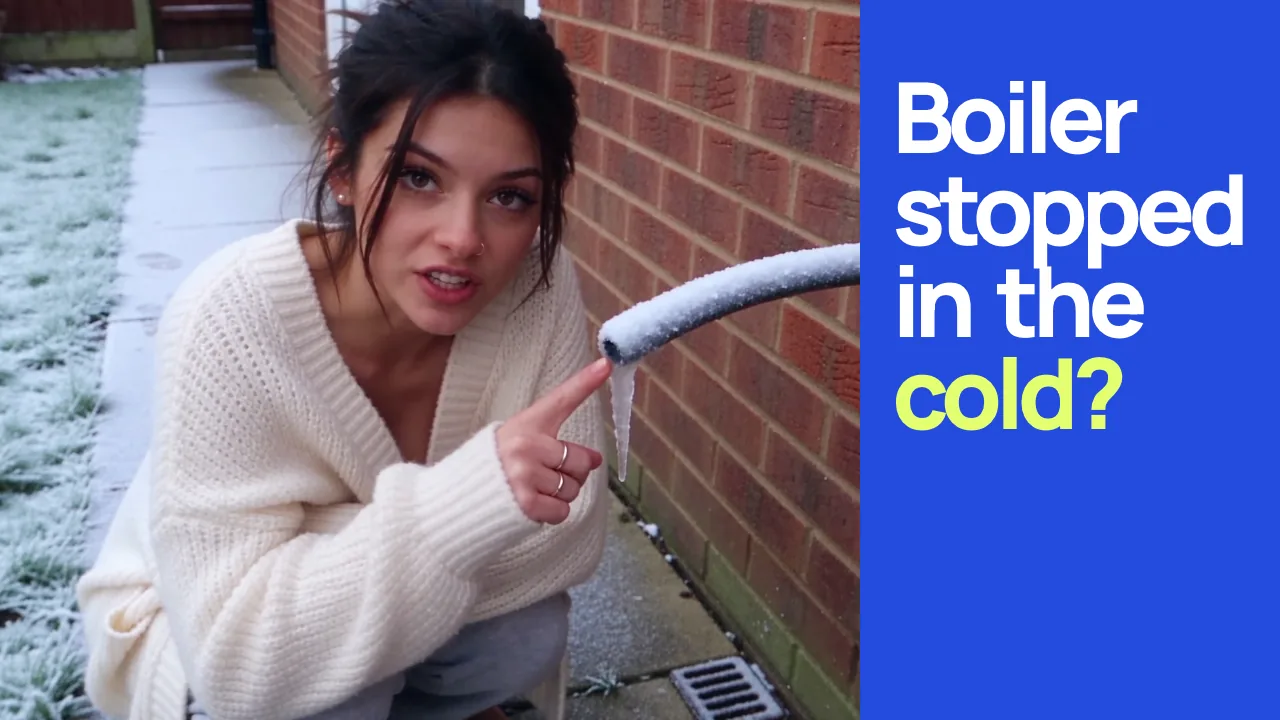
- In freezing weather, a frozen condensate pipe can stop a condensing boiler, and you may hear it gurgling. Thaw the outside pipe with a hot water bottle, a heat pack or warm water, never boiling, then reset the boiler.
Is the heating working now?
See this in the guideTime for a Gas Safe registered engineer
The cause is probably inside the system: a blocked valve, sludge, a pump, or a fault in the boiler. Don’t open the boiler casing yourself.
Tell the engineer what you’ve already tried. It saves time on the visit.
Warm again. Keep an eye on it.
- Topping up once or twice a year is normal. Having to do it much more often means water is escaping somewhere.
- The same radiator needs bleeding every few weeks? Air or gas is getting into the system, which points to a leak or corrosion.
- Either way, get a Gas Safe registered engineer to look at it.
What you’ll need
- A radiator key
It fits the small square pin on most UK radiators. DIY shops sell them for about £1, and some newer radiators have a slotted valve that a flat screwdriver fits instead.
Brass radiator keys on Amazon - A cloth or old towel
To catch the drips.
- Time for the heating to cool
Turn it off and give the radiators 20 to 30 minutes. The water inside can scald.
Amazon links are affiliate links. If you buy through one, HanaHow gets a small commission and you pay the same. As an Amazon Associate I earn from qualifying purchases.
If you’re bleeding more than one radiator, start downstairs with the one furthest from the boiler.
Bleed the radiator
- Find the bleed valve at one of the top corners. It’s a small square pin in a round cap.
- Hold the cloth under it and fit the key.
- Turn the key anticlockwise, about a quarter turn. Never open it more than half a turn.
- You’ll hear a hiss. That’s the air escaping.
- When water comes out instead, in a steady trickle, turn the key back clockwise until it’s snug. Don’t force it.
Check the boiler pressure
Bleeding lets a little water out, and that lowers the pressure in a combi or system boiler. Check the pressure gauge or the boiler’s display.
- With the heating off, most boilers want between 1 and 1.5 bar, often marked in green on a dial. Anything up to about 2 bar with the heating off is fine.
- With the heating on, the reading goes up, to about 2 bar, because the water expands as it warms. Check it with the heating off.
- If you can’t find a pressure reading anywhere, you probably have a tank in the loft that tops the system up by itself, so you can skip the next part.
Top up the pressure
Many boilers have a filling loop, usually underneath: a silver braided hose between two small taps.
- Open one tap fully.
- Open the other one slowly. You’ll hear water going in.
- Watch the pressure, and close both taps once it’s back between 1 and 1.5 bar.
- If the hose unscrews, take it off. Water regulations guidance says a separate filling hose should be disconnected when you’re not using it, to stop heating water getting back into the mains.
Some boilers have a filling key or a lever instead of a loop. The boiler’s manual shows where it is and how it works.
If you overshoot, bleed a radiator the same way, with the heating off, until the pressure drops back between 1 and 1.5 bar. It’s slow, so give it time. If the pressure keeps climbing on its own, or gets near 3 bar, get a Gas Safe registered engineer to check the filling loop and the expansion vessel.
Check it’s worked
Put the heating back on and make sure the radiator’s thermostatic valve is turned up. Give it a few minutes, then feel the radiator. It should be warm right to the top.
If it keeps happening
Topping up the pressure once or twice a year is normal. If you’re doing it much more often than that, or the same radiator needs bleeding every few weeks, something’s leaking or wrong inside the system. Get a Gas Safe registered engineer to look at it.
Other cold radiators
Cold at the bottom
If the top is warm and the bottom is cool or cold, it’s usually sludge. Radiators slowly rust on the inside, and the sludge settles along the bottom where the hot water can’t push through. Bleeding won’t fix it. A heating engineer can flush the system, and a magnetic filter and inhibitor help stop it coming back.
Cold all over
If one radiator stays cold while the others heat up, first check the boiler pressure is at least 1 bar with the heating off, then check its valves.
- Turn the thermostatic valve, the numbered knob, to its highest setting.
- If it still won’t heat, unscrew the thermostatic head and look for a small pin underneath. It should move in and spring back out when pressed gently. These pins often stick when a radiator hasn’t been used for a while. The valve and pipe can be hot, so use a cloth. A little WD-40 and gently easing a stuck pin with grips can free it. Don’t pull it out, and if you’re not confident, call a heating engineer. Screw the head back on afterwards.
- The lockshield valve on the other side sits under a plastic cap and usually needs a spanner. If it’s been turned off, for example to take the radiator down for decorating, open it by turning it anticlockwise. Start with a turn or so rather than fully open, because it also shares heat between radiators, and opening it all the way can leave others cooler. If other radiators struggle afterwards, the system may need balancing.
If it’s still cold, a valve may be blocked, and that’s a job for a heating engineer.
Every radiator is cold
Check the boiler has power, from its switch and fuse, and if you have a prepayment meter, that there’s credit. Check the timer or programmer is on and the room thermostat is turned up. Look at the boiler for an error code and check the pressure is at least 1 bar. In freezing weather, a frozen condensate pipe can stop a condensing boiler: thaw the outside pipe with a hot water bottle, a heat pack or warm water, never boiling, then reset the boiler. If the heating still won’t come on, call a Gas Safe registered engineer.
Sources
- Worcester Bosch: how to bleed a radiator, how often to top up the pressure, repressurising guide, homeowner guide and frozen condensate pipes. Baxi: how to thaw a frozen condensate pipe.
- British Gas: how to bleed a radiator, no central heating, boiler pressure and how to repressurise your boiler.
- Which?: how to bleed your radiators. Baxi: why are my radiators cold. Vaillant: why is my radiator not working and how to balance radiators. Ideal Heating: radiator cold at the bottom, radiator cold at the top and boiler pressure too high.
- The Water Supply (Water Fittings) Regulations 1999, schedule 2, paragraph 24, and Installer Online on filling loops.
Read the video transcript
Cold at the top, warm at the bottom? That's air trapped in your radiator. Here's how to let it out. Air drifts up and gets trapped at the top of the radiator, where the hot water can't reach. That's your cold strip. If it's cold at the bottom instead, that's usually sludge, and bleeding won't fix it. You'll need a radiator key, which costs about £1, or a flat screwdriver if the valve has a slot. Turn the heating off and give the radiators 20 to 30 minutes to cool, because the water inside can scald. Doing more than one? Start downstairs, with the radiator furthest from the boiler. The bleed valve is at one of the top corners: a small square pin in a round cap. Hold a cloth under it, fit the key, and turn it anticlockwise, about a quarter turn, never more than half. You'll hear a hiss. That's the air. When water comes out instead, in a steady trickle, turn the key back clockwise until it's snug. Bleeding lowers the pressure in a combi or system boiler, so check the pressure gauge or display. With the heating off, most want between 1 and 1.5 bar, often marked in green. No pressure reading anywhere? You probably have a tank in the loft that tops itself up, so skip this part. To top it up, find the filling loop, usually under the boiler: a silver braided hose between two small taps. Open one tap fully, then the other one slowly, and you'll hear water going in. Close both taps once it's back between 1 and 1.5, and if the hose unscrews, take it off. Some boilers have a filling key or a lever instead, and the manual shows where. Gone too high? Bleed a radiator until it drops back. Put the heating back on, check the radiator's valve is turned up, give it a few minutes, and feel it. It should be warm right to the top. If you're topping up much more often than once or twice a year, or the same radiator needs bleeding every few weeks, something's leaking or wrong inside the system. Get a Gas Safe registered engineer to look at it. The written guide has a fix finder for other cold radiators, including one that's cold all over. That's HanaHow. See you next time.
Something not quite right?
Let us know